We provide a wide range of services related to the supplied equipment and quality assurance.
The implementation of the ISO/IEC 17025 management system in the laboratory is a reliable way to improve the efficiency of the company. One of the main tasks of ISO/IEC 17025 as a management system is to organize the work so that laboratory processes are aimed at continuous improvement of the quality of measurements within the company and, as a result, improvement of the quality of research results. Due to this, the QMS allows minimizing risks.
ISO/IEC 17025 helps laboratories become better, increases their attractiveness in the eyes of customers, business partners and the state. The implementation of the QMS and the subsequent accreditation of the laboratory according to the ISO/IEC 17025 standard is an opportunity for your company to use the best international experience in the field of quality management systems. But such results can only be achieved with the right approach to the implementation process itself. From the management, responsible persons and employees of the company, maximum involvement will be required at each stage of implementation.
The high and stable quality of laboratory work is determined not only by the availability of modern high-precision equipment and the professionalism of employees. The QMS of an enterprise is of great importance, the requirements for which are established by the GOST ISO / IEC 17025-2009 standard. The introduction of a quality management system for testing and calibration laboratories improves the work of the organization in several areas:
- clear distribution of duties and responsibilities;
- reduction in the number of defects, alterations in work;
- creation of documented procedures, "Knowledge Base";
- exclusion of duplicate processes;
- increase in laboratory productivity
Stages of implementation of the quality management system for testing and calibration laboratories`
- formation of a working group of employees and appointment of a person responsible for the development and implementation of the quality management system of the testing (calibration) laboratory.
- conducting training seminars with the personnel of the enterprise.
- diagnostic audit of the organizational structure and activities of the laboratory for compliance with the requirements of the standard.
- development of documentation (quality manual, documentation of procedures).
- implementation of a quality management system for laboratories according to the standard GOST ISO / IEC 17025-2009 (2017).
- QMS testing in operation, final audit, preparation for certification.
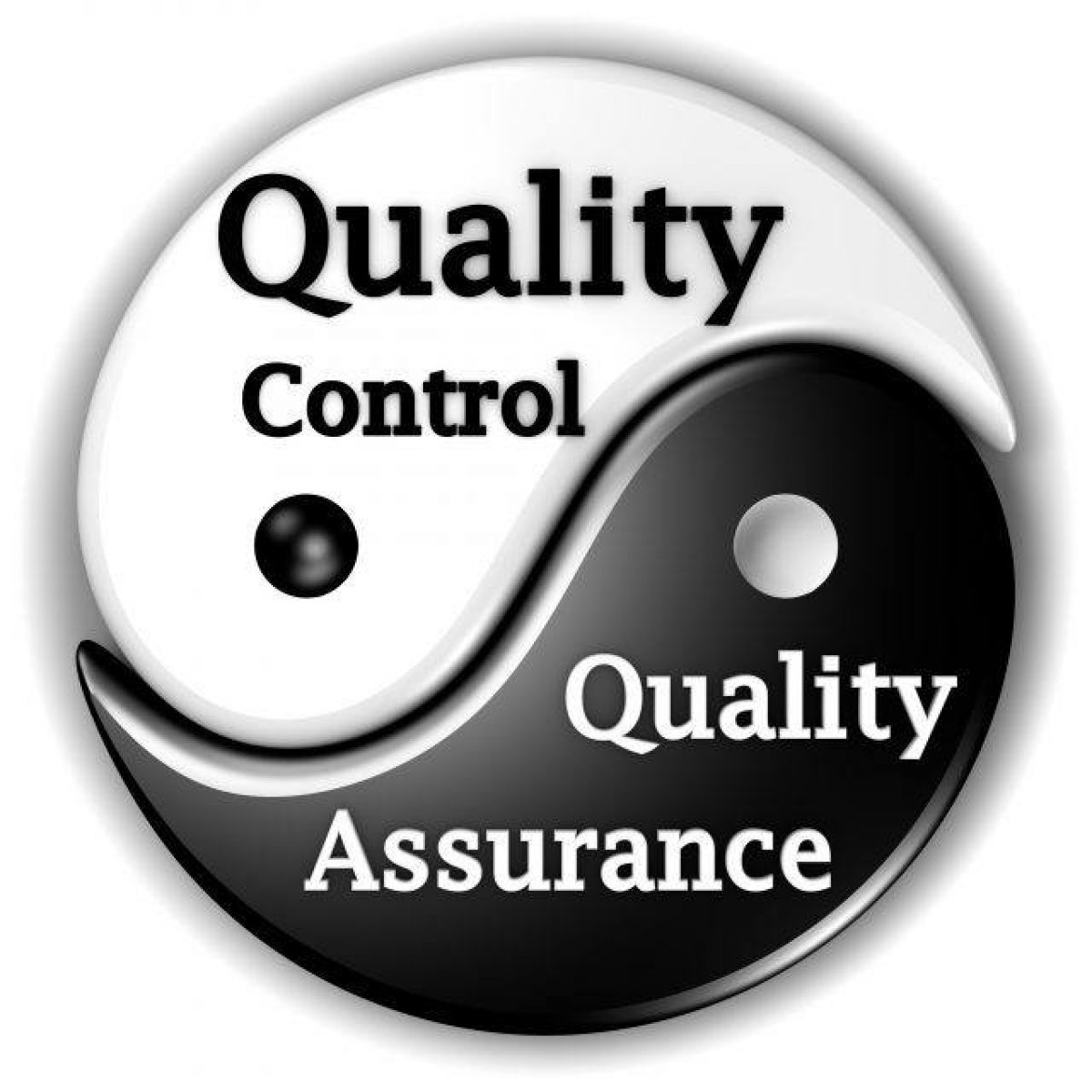
QUALITY ASSURANCE & QUALITY CONTROL
Quality assurance (QA) and quality control (QC) are two terms that are often used interchangeably. Although similar, there are distinct differences between the two concepts.
In the healthcare and life sciences industries, quality processes like quality assurance (QA) and quality control (QC) are required by the FDA and the International Organization for Standardization’s ISO 9000. If QA and QC aren’t followed, you could end up sending out an end product that not only doesn’t meet standards but could also have life-threatening consequences.
Both QA and QC processes are important to quality standards, but so is knowing the difference between quality assurance and quality control. They’re often used interchangeably, but they are two different processes taking place at different times.
Quality assurance and quality control both play vital and distinct roles in the health of life sciences companies and are big parts of quality management. Understanding those roles can help your organization master each to deliver the best products possible.
Process (QA) vs. Product (QC)
QA is process-oriented, and it focuses on preventing quality issues. QC is product-oriented and focused on identifying quality issues in manufactured products that could affect customer satisfaction. Another way to understand this distinction is actions vs. results. QA involves the actions which create the product, while QC is focused on the resulting product. Several examples of each type of activity are detailed below.
QA Processes
• Documentation
• Audits
• Supplier management
• Personnel training
• Change control
• Investigation procedures
QC Procedures:
• Batch inspection
• Product sampling
• Validation testing
• Laboratory testing
• Software testing
 Armenia, 2210, Kotayk Marz, Arinj village G block, 6th street, building 2/2
 Тел: +374-11 220330
 sales.labtechgroup@gmail.com
